17.06.2026
Khiva is a city from an Eastern fairy tale.
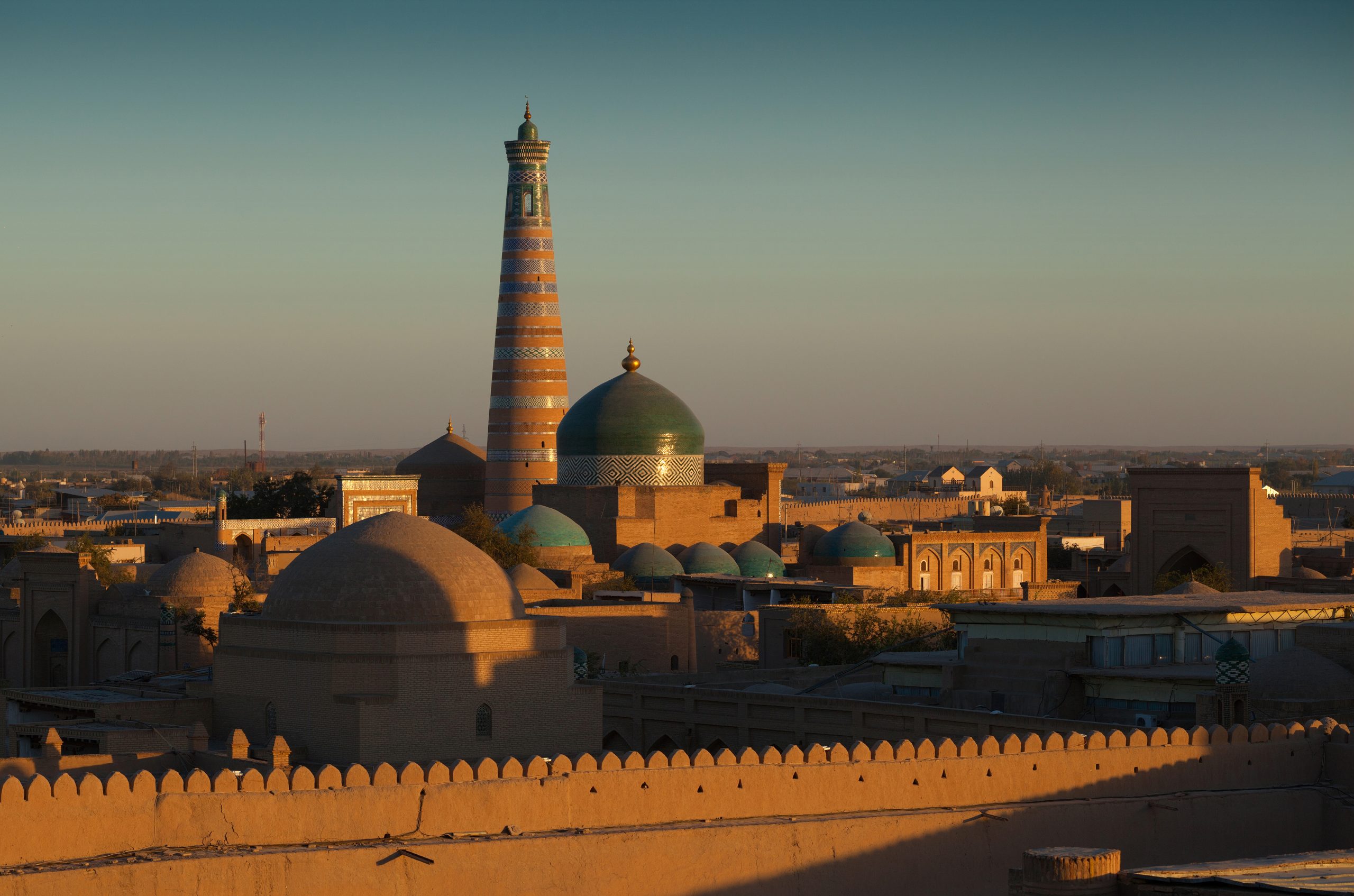
If there is a city capable of transporting a person several centuries back in time, it is Khiva. Here you don’t need to imagine the ancient East — it is already all around you. Narrow clay streets, fortress walls, carved wooden columns, turquoise minarets, and the silence of the old city create the feeling that time has stopped.
Khiva is one of the most unusual cities in Uzbekistan and a true jewel of the Great Silk Road.
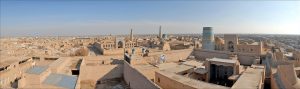
A city within a fortress.
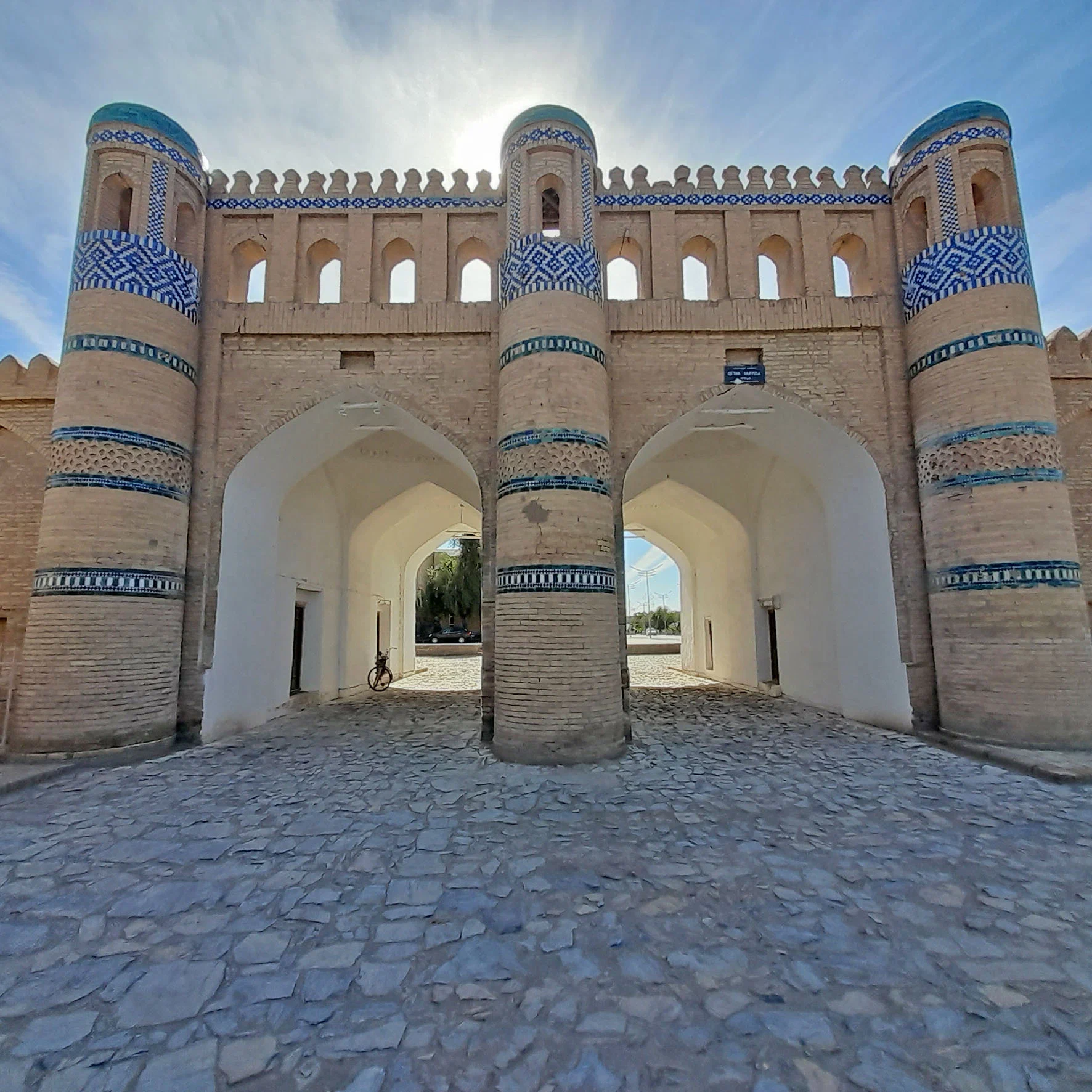
The main feature of Khiva is its historical center, Ichan-Kala. It is a true fortress city surrounded by powerful clay walls.
Inside Ichan-Kala are located:
- • ancient madrasahs
- • minarets
- • mosques
- • palaces
- • caravanserais
- • craft workshops
Unlike many historical sites around the world, everything here has been preserved almost in its original form. When you pass through the fortress gates, it feels as if you’ve stepped onto the set of a historical film.
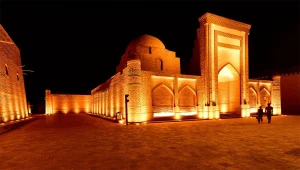
Why is Khiva called an open-air museum
In Khiva, almost every corner has historical value. The city has preserved the atmosphere of the medieval East better than many other cities in Central Asia.
It is no coincidence that UNESCO was among the first in the region to include Ichan-Kala on the World Heritage List.
It is especially beautiful here in the evening, when the old walls and minarets are illuminated with soft light. Khiva becomes quiet, mysterious, and truly magical.
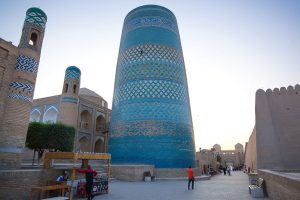
The minaret that was meant to become the tallest.
One of the most recognizable symbols of the city is Kalta-Minor — an unusual wide minaret covered with bright blue tiles.
Interestingly, the minaret was never completed. According to the ruler’s plan, it was supposed to become the tallest minaret in the East, but construction was stopped after the khan’s death.
That is why Kalta-Minor looks so unusual — wide and “cut off.” Today, this incompleteness has made it one of the most recognizable landmarks in Uzbekistan.
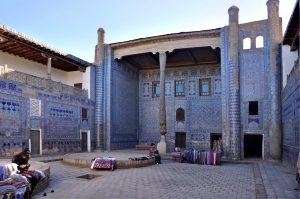
Khan’s palace of Khiva
To feel the atmosphere of the lives of Eastern rulers, it is worth visiting the Tash-Hauli Palace.
Inside the palace:
- • luxurious inner courtyards
- • rooms with oriental mosaic
- • carved wooden columns
- • traditional ayvans
- • walls with hand-painted decorations
What is especially impressive is the delicate work of local craftsmen — many decorative elements were created by hand without modern tools.
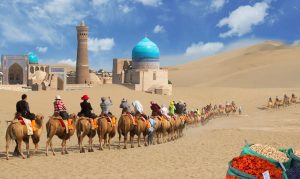
Khiva and the Great Silk Road
Once Khiva was an important stop for caravans crossing the deserts of Central Asia. Merchants from Persia, China, India, and Arab countries passed through the city.
Here they traded:
- • silk
- • spices
- • carpets
- • jewelry
- • ceramics
- • weapons and fabrics
Khiva remained an important commercial and cultural center of the region for a long time.
Some interesting facts about Khiva
- • Most buildings in the old city are made of clay.
- • Khiva has more than 50 historical monuments and hundreds of ancient houses.
- • The city is often called the most “cinematic” in Uzbekistan.
- • Many craftsmen still work using traditional technologies.
- • Khiva is especially popular among photographers and architecture enthusiasts.

What to visit in Bukhara
Be sure to include in your itinerary:
- • Kalyan Minaret
- • Ark Fortress
- • Lyabi-Hauz
- • Samanid Mausoleum
- • Chor-Minor Madrasah
- • Bukhara trading domes
“Khiva is a place where the East has been preserved in its authentic form. Here you don’t need to look for the atmosphere of an ancient city — it surrounds you everywhere.”
AlfaNexus Editorial
Leave a Comment